
أحدث المقالات

MALE INFERTILITY part 3

MALE INFERTILITY part 4

MALE INFERTILITY Invasive Male Infertility Therapy of the Obstructive azoospermia (OA) Comprehensive Review Article Part 4 Prof. Dr. Semir. A. Salim. Al Samarrai Obstructive azoospermia (OA): Obstructive azoospermia (OA) is the absence of spermatozoa in the sediment of a centrifuged sample of ejaculate due to obstruction [1]. Obstructive azoospermia is less common than NOA and occurs in 20-40% of men with azoospermia [2,3]. Men with OA usually have normal FSH, testes of normal size and epididymal enlargement [4]. Of clinical relevance, men with late maturation arrest may present with normal gonadotropins and testicular size and may be only distinguished from those with OA at the time of surgical exploration. The vas deferens may be absent bilaterally (CBAVD) or unilaterally (CUAVD). Obstruction in primary infertile men is more frequently present at the epididymal level. Classification of obstructive azoospermia: Intratesticular obstruction occurs in 15% of men with OA [5]. Congenital forms are less common than acquired forms (post-inflammatory or post-traumatic) (Table 1). Table 1: Causes of obstruction of the genitourinary system Vas deferens obstruction: Vas deferens obstruction is the most common cause of acquired obstruction following vasectomy [6]. Approximately 2-6% of these men request vasectomy reversal (see 2019 EAU Guidelines on Male Infertility). Vasal obstruction may also occur after hernia repair [7,8]. The most common congenital vasal obstruction is CBAVD, often accompanied by CF. Unilateral agenesis or a partial defect is associated with contralateral seminal duct anomalies or renal agenesis in 80% and 26% of cases, respectively [9]. Ejaculatory duct obstruction: Ejaculatory duct obstruction is found in 1-5% of cases of OA and is classified as cystic or post-inflammatory or calculi of one or both ejaculatory ducts [10,11]. Cystic obstructions are usually congenital (i.e., Mullerian duct cyst or urogenital sinus/ejaculatory duct cysts) and are typically midline. In urogenital sinus abnormalities, one or both ejaculatory ducts empty into the cyst [12], while in Mullerian duct anomalies, the ejaculatory ducts are laterally displaced and compressed by the cyst [13]. Paramedian or lateral intraprostatic cysts are rare [14]. Post-inflammatory obstructions of the ejaculatory duct are usually secondary to urethra-prostatitis [15]. Congenital or acquired complete obstructions of the ejaculatory ducts are commonly associated with low seminal volume, decreased or absent seminal fructose, and acidic pH. The seminal vesicles (anterior-posterior diameter > 15 mm) and ejaculatory duct (> 2.3 mm in width) are usually dilated [11,15-17]. Functional obstruction of the distal seminal ducts: Functional obstruction of the distal seminal ducts might be attributed to local neurogenic dysfunction [18]. This abnormality is often associated with urodynamic dysfunction. Impaired sperm transport can be observed as idiopathic or due to spinal cord injury, multiple sclerosis, retroperitoneal lymph node dissection, pelvic surgery, SSRIs, α-blockers and typical antipsychotic medications [19]. Diagnostic evaluation: Clinical history Clinical history-taking should follow the investigation and diagnostic evaluation of infertile men. Risk factors for obstruction include prior surgery, iatrogenic injury during inguinal herniorrhaphy, orchidopexy or hydrocelectomy. Clinical examination Clinical examination should follow the guidelines for the diagnostic evaluation of infertile men. Obstructive azoospermia is indicated by at least one testis with a volume > 15 mL, although a smaller volume may be found in some patients with: • obstructive azoospermia and concomitant partial testicular failure. • enlarged and dilated epididymis. • nodules in the epididymis or vas deferens. • absence or partial atresia of the vas deferens. Semen analysis Azoospermia means the inability to detect spermatozoa after centrifugation at ×400 magnification. At least two semen analyses must be carried out [20,21]. When semen volume is low, a search must be made for spermatozoa in urine after ejaculation. Absence of spermatozoa and immature germ cells in the semen pellet suggest complete seminal duct obstruction. Hormone levels Hormones including FSH and inhibin-B should be normal, but do not exclude other causes of testicular azoospermia (e.g., NOA). Although inhibin-B concentration is a good index of Sertoli cell integrity reflecting closely the state of spermatogenesis, its diagnostic value is no better than that of FSH and its use in clinical practice has not been widely advocated [22]. Genetic testing Inability to palpate one or both sides of the vas deferens should raise concern for a CFTR mutation. Any patient with unilateral or bilateral absence of the vas deferens or seminal vesicle agenesis should be offered CFTR testing [23]. Testicular biopsy Testicular biopsy must be combined with TESE for cryopreservation. Although studies suggest that a diagnostic or isolated testicular biopsy [24] is the most important prognostic predictor of spermatogenesis and sperm retrieval, the EAU Guidelines edition 2022 recommends not to perform testis biopsies (including fine needle aspiration [FNA]) without performing simultaneously a therapeutic sperm retrieval, as this will require a further invasive procedure after biopsy. Furthermore, even patients with extremes of spermatogenic failure (e.g., Sertoli Cell Only syndrome [SCOS]) may harbour focal areas of spermatogenesis [25,26]. Disease management: Intratesticular obstruction Only TESE allows sperm retrieval in these patients and is therefore recommended. Epididymal obstruction Microsurgical epididymal sperm aspiration (MESA) or percutaneous epididymal sperm aspiration (PESA) [27] is indicated in men with CBAVD. Testicular sperm extraction and percutaneous techniques, such as testicular sperm aspiration (TESA), are also options [28]. The source of sperm used for ICSI in cases of OA and the aetiology of the obstruction do not affect the outcome in terms of fertilisation, pregnancy, or miscarriage rates [29]. Usually, one MESA procedure provides sufficient material for several ICSI cycles [30] and it produces high pregnancy and fertilisation rates [31]. In patients with OA due to acquired epididymal obstruction and with a female partner with good ovarian reserve, microsurgical epididymovasostomy (EV) is recommended [32]. Epididymovasostomy can be performed with different techniques such as end-to-site and intussusception [33]. Anatomical recanalisation following surgery may require 3-18 months. A recent systematic review indicated that the time to patency in EV varies between 2.8 to 6.6 months. Reports of late failure are heterogeneous and vary between 1 and 50% [34]. Before microsurgery, and in all cases in which recanalisation is impossible, epididymal spermatozoa should be aspirated intra-operatively by MESA and cryopreserved to be used for

MALE INFERTILITY part 4 قراءة المزيد »

MALE INFERTILITY part 2

MALE INFERTILITY part 2

MALE INFERTILITY The Varicocele testis and the male accessory gland infections Comprehensive Review Article Part 2 Prof. Dr. Semir. A. Salim. Al Samarrai At present, the clinical management of varicocele is still mainly based on physical examination; nevertheless, scrotal colour Doppler US is useful in assessing venous reflux and diameter, when palpation is unreliable and/or in detecting recurrence/persistence after surgery [1]. Definitive evidence of reflux and venous diameter may be utilised in the decision to treat. Scrotal US is able to detect changes in the proximal part of the seminal tract due to obstruction. Especially for CBAVD patients, scrotal US is a favourable option to detect the abnormal appearance of the epididymis. Given that, three types of epididymal findings are described in CBAVD patients: tubular ectasia (honeycomb appearance), meshwork pattern, and complete or partial absence of the epididymis [2,3]. Transrectal US: For patients with a low seminal volume, acidic pH and severe oligozoospermia or azoospermia, in whom obstruction is suspected, scrotal and transrectal US are of clinical value in detecting CBAVD and presence or absence of the epididymis and/or seminal vesicles (SV) (e.g., abnormalities/agenesis). Likewise, transrectal US (TRUS) has an important role in assessing obstructive azoospermia (OA) secondary to CBAVD or anomalies related to the obstruction of the ejaculatory ducts, such as ejaculatory duct cysts, seminal vesicular dilatation or hypoplasia/atrophy, although retrograde ejaculation should be excluded as a differential diagnosis [1,4]. Special Conditions and Relevant Clinical Entities: Cryptorchidism Cryptorchidism is the most common congenital abnormality of the male genitalia; at 1 year of age nearly 1% of all full-term male infants have cryptorchidism [5]. Approximately 30% of undescended testes are nonpalpable and may be located within the abdominal cavity. These guidelines will only deal with management of cryptorchidism in adults. Classification The classification of cryptorchidism is based on the duration of the condition and the anatomical position of the testes. If the undescended testis has been identified from birth, then it is termed congenital while diagnosis of acquired cryptorchidism refers to men that have been previously noted to have testes situated within the scrotum. Cryptorchidism is categorised on whether it is bilateral or unilateral and the location of the testes (inguinal, intra-abdominal or ectopic). Aetiology and pathophysiology It has been postulated that cryptorchidism may be a part of the so-called testicular dysgenesis syndrome (TDS), which is a developmental disorder of the gonads caused by environmental and/or genetic influences early in pregnancy, including exposure to endocrine disrupting chemicals. Besides cryptorchidism, TDS includes hypospadias, reduced fertility, increased risk of malignancy, and Leydig/Sertoli cell dysfunction [6]. Cryptorchidism has also been linked with maternal gestational smoking [7] and premature birth [8]. Pathophysiological effects in maldescended testes: Degeneration of germ cells The degeneration of germ cells in maldescended testes is apparent even after the first year of life and varies, depending on the position of the testes [9]. During the second year, the number of germ cells declines. Early treatment is therefore recommended (surgery should be performed within the subsequent year) to conserve spermatogenesis and hormone production, as well as to decrease the risk for tumours [10]. Surgical treatment is the most effective. Meta-analyses on the use of medical treatment with GnRH and hCG have demonstrated poor success rates [11,12]. It has been reported that hCG treatment may be harmful to future spermatogenesis; therefore, the Nordic Consensus Statement on treatment of undescended testes does not recommend it use on a routine basis [13]. See also the EAU Guidelines on Paediatric Urology [14]. There is increasing evidence to suggest that in unilateral undescended testis, the contralateral normal descended testis may also have structural abnormalities, including smaller volume, softer consistency and reduced markers of future fertility potential (spermatogonia/tubule ratio and dark spermatogonia) [15,16]. This implies that unilateral cryptorchidism may affect the contralateral testis and patients and parents should be counselled appropriately. Relationship with fertility Semen parameters are often impaired in men with a history of cryptorchidism [17]. Early surgical treatment may have a positive effect on subsequent fertility [18]. In men with a history of unilateral cryptorchidism, paternity is almost equal (89.7%) to that in men without cryptorchidism (93.7%). In men with bilateral cryptorchidism, oligozoospermia can be found in 31% and azoospermia in 42%. In cases of bilateral cryptorchidism, the rate of paternity falls to 35-53% [19]. It is also important to screen for hypogonadism, as this is a potential long-term sequela of cryptorchidism and could contribute to impaired fertility and potential problems such as testosterone deficiency and MetS [20]. Germ cell tumours As a component of TDS, cryptorchidism is a risk factor for testicular cancer and is associated with testicular microcalcifications and intratubular germ cell neoplasia in situ (GCNIS), formerly known as carcinoma in situ (CIS) of the testes. In 5-10% of testicular cancers, there is a history of cryptorchidism [21]. The risk of a germ cell tumour is 3.6-7.4 times higher than in the general population and 2-6% of men with a history of cryptorchidism will develop a testicular tumour [5]. Orchidopexy performed before the onset of puberty has been reported to decrease the risk of testicular cancer [22]. However, there is evidence to suggest that even men who undergo early orchidopexy still harbour a higher risk of testicular cancer than men without cryptorchidism [23]. Therefore, all men with a history of cryptorchidism should be warned that they are at increased risk of developing testicular cancer and should perform regular testicular self-examination [24]. There is also observational study data suggesting that cryptorchidism may be a risk factor for worsening clinical stage of seminoma but this needs to be substantiated with future prospective studies [25]. Disease management: Hormonal treatment Human chorionic gonadotropin or GnRH is not recommended for the treatment of cryptorchidism in adulthood. Although some studies have recommended the use of hormonal stimulation as an adjunct to orchidopexy to improve fertility preservation, there is a lack of long-term data and concerns regarding impairment to spermatogenesis with the use of these drugs [26]. Surgical treatment In adolescence, removal of an intra-abdominal testis (with a normal

MALE INFERTILITY part 2 قراءة المزيد »

MALE INFERTILITY

MALE INFERTILITY

MALE INFERTILITY Epidemiology, aetiology, pathophysiology, and risk factors Comprehensive Review Article Part 1 Prof. Dr. Semir. A. Salim. Al Samarrai Definition and classification: Infertility is defined by the inability of a sexually active, non-contraceptive couple to achieve spontaneous pregnancy within 1 year [1]. Primary infertility refers to couples that have never had a child and cannot achieve pregnancy after at least 12 consecutive months having sex without using birth control methods. Secondary infertility refers to infertile couples who have been able to achieve pregnancy at least once before (with the same or different sexual partner). Recurrent pregnancy loss is distinct from infertility and is defined as two or more failed pregnancies [2,3]. Epidemiology/aetiology/pathophysiology/risk factors: Introduction About 15% of couples do not achieve pregnancy within 1 year and seek medical treatment for infertility. One in eight couples encounter problems when attempting to conceive a first child and one in six when attempting to conceive a subsequent child [4]. In 50% of involuntarily childless couples, a male-infertility-associated factor is found, usually together with abnormal semen parameters [1]. For this reason, all male patients belonging to infertile couples should undergo medical evaluation by a urologist trained in male reproduction. Male fertility can be impaired as a result of [1]: • congenital or acquired urogenital abnormalities. • gonadotoxic exposure (e.g., radiotherapy or chemotherapy). • malignancies. • urogenital tract infections. • increased scrotal temperature (e.g., as a consequence of varicocele). • endocrine disturbances. • genetic abnormalities. • immunological factors. In 30-40% of cases, no male-associated factor is found to explain impairment of sperm parameters and historically was referred to as idiopathic male infertility. These men present with no previous history of diseases affecting fertility and have normal findings on physical examination and endocrine, genetic and biochemical laboratory testing, although semen analysis may reveal pathological findings. Unexplained male infertility is defined as infertility of unknown origin with normal sperm parameters and partner evaluation. Between 20 and 30% of couples will have unexplained infertility. It is now believed that idiopathic male infertility may be associated with several previously unidentified pathological factors, which include but are not limited to endocrine disruption as a result of environmental pollution, generation of reactive oxygen species (ROS)/sperm DNA damage, or genetic and epigenetic abnormalities [5]. Advanced paternal age has emerged as one of the main risk factors associated with the progressive increase in the prevalence of male factor infertility [6–13]. Likewise, advanced maternal age must be considered over the management of every infertile couple, and the consequent decisions in the diagnostic and therapeutic strategy of the male partner [14,15]. This should include the age and ovarian reserve of the female partner, since these parameters might determine decision-making in terms of timing and therapeutic strategies (e.g., assisted reproductive technology [ART] vs. surgical intervention) [6–9]. Table 1 summarises the main male-infertility-associated factors. Table 1: Male infertility causes and associated factors and percentage of distribution in 10,469 patients Diagnostic work-up: Focused evaluation of male patients must always be undertaken and should include: a medical and reproductive history; physical examination; semen analysis – with strict adherence to World Health Organization (WHO) reference values for human semen characteristics [17], and hormonal evaluation. Other investigations (e.g., genetic analysis and imaging) may be required depending on the clinical features and semen parameters. Medical/reproductive history and physical examination: Medical and reproductive history Medical history should evaluate any risk factors and behavioural patterns that could affect the male partner’s fertility, such as lifestyle, family history (including, testicular cancer), comorbidity (including systemic diseases; e.g., hypertension, diabetes mellitus, obesity, MetS, testicular cancer, etc.), genito-urinary infections (including sexually transmitted infections), history of testicular surgery and exclude any potential known gonadotoxins [18]. Typical findings from the history of a patient with infertility include: • cryptorchidism (uni- or bilateral). • testicular torsion and trauma. • genitourinary infections. • exposure to environmental toxins. • gonadotoxic medications (anabolic drugs, chemotherapeutic agents, etc.). • exposure to radiation or cytotoxic agents. Physical examination Physical examination Focused physical examination is compulsory in the evaluation of every infertile male, including presence of secondary sexual characteristics. The size, texture and consistency of the testes must be evaluated. In clinical practice, testicular volume is assessed by Prader’s orchidometer [19]; orchidometry may overestimate testicular volume when compared with US assessment [20]. There are no uniform reference values in terms of Prader’s orchidometer-derived testicular volume, due to differences in the populations studied (e.g., geographic area, nourishment, ethnicity and environmental factors) [19–21]. The mean Prader’s orchidometer-derived testis volume reported in the European general population is 20.0 ± 5.0 mL [19], whereas in infertile patients it is 18.0 ± 5.0 mL [19,22,23]. The presence of the vas deferens, fullness of epididymis and presence of a varicocele should be always determined. Likewise, palpable abnormalities of the testis, epididymis, and vas deferens should be evaluated. Other physical alterations, such as abnormalities of the penis (e.g., phimosis, short frenulum, fibrotic nodules, epispadias, hypospadias, etc.), abnormal body hair distribution and gynecomastia, should also be evaluated. Typical findings from the physical examination of a patient with characteristics suggestive for testicular deficiency include: • abnormal secondary sexual characteristics. • abnormal testicular volume and/or consistency. • testicular masses (potentially suggestive of cancer). • absence of testes (uni-bilaterally). • gynaecomastia. • varicocele. Semen analysis A comprehensive andrological examination is always indicated in every infertile couple, both if semen analysis shows abnormalities, and even in the case of normal sperm parameters as compared with reference values [24]. Important treatment decisions are based on the results of semen analysis and most studies evaluate semen parameters as a surrogate outcome for male fertility. However, semen analysis cannot precisely distinguish fertile from infertile men [25]; therefore, it is essential that the complete laboratory work-up is standardised according to reference values (Table 2). Table 2: Lower reference limits (5th centiles and their 95% CIs) for semen characteristics There is consensus that modern semen analysis must follow these guidelines. Ejaculate analysis has been standardised by the WHO and disseminated by publication of the most updated version of the WHO Laboratory Manual

MALE INFERTILITY قراءة المزيد »

Overactive Urinary Bladder

Overactive Urinary Bladder

Overactive Urinary Bladder Diagnostic and Evaluation Comprehensive Review Article Part 2 Prof. Dr. Semir. A. Salim. Al Samarrai Taking a thorough clinical history is fundamental to the process of clinical evaluation. Despite the lack of high-level evidence to support taking a history, there is universal agreement that it should be the first step in the assessment of anyone with lower urinary tract symptoms (LUTS). The history should include a full evaluation of LUTS, as well as sexual, gastrointestinal and neurological symptoms. Details of urgency episodes, the type, timing and severity of urinary incontinence (UI), and some attempt to quantify symptoms should also be made. The history should help to categorise LUTS as storage, voiding and post-micturition symptoms, and classify UI as stress urinary incontinence (SUI), urge urinary incontinence (UUI), mixed urinary incontinence (MUI) or overflow incontinence; the latter being defined as “the complaint of UI in the symptomatic presence of an excessively (over-) full bladder (no cause identified)” [1]. The history should also identify patients who need referral to an appropriate clinic/specialist. These may include patients with associated pain, haematuria, history of recurrent urinary tract infection (UTI), pelvic surgery or radiotherapy, constant leakage suggesting a fistula, new-onset enuresis or suspected neurological disease. A neurological, obstetric and gynaecological history may help to understand the underlying cause and identify factors that may affect treatment decisions. Guidance on history-taking and diagnosis in relation to UTIs, neuro-urological conditions and chronic pelvic pain (CPP) can be found in the relevant EAU Guidelines [2,3,4]. Patients should also be asked about other comorbidity as well as smoking status, previous surgical procedures and current medications, as these may affect LUTS. There is little evidence from clinical trials that carrying out a clinical examination improves outcomes, but widespread consensus suggests that clinical examination remains an essential part of assessment of patients with LUTS. Examination should include abdominal examination, to detect an enlarged urinary bladder or other abdominal mass, and digital examination of the vagina and/or rectum. Pelvic examination in women includes assessment of oestrogen status, pelvic floor muscle (PFM) function and careful assessment of any associated pelvic organ prolapse (POP). A cough stress test is necessary to look for stress urinary incontinence (SUI). Among women with genital prolapse, the cough test was found to show good agreement with urodynamic studies (UDS) in the detection of SUI. Urethral mobility can be assessed. Pelvic floor muscle contraction strength can also be assessed digitally. A focused neuro-urological examination should also be routinely undertaken. Patient questionnaires include symptom scores, symptom questionnaires/scales/indices, patient-reported outcome measures (PROMs) and health-related quality of life (QoL) measures. Questionnaires should have been validated for the language in which they are being used, and, if used for outcome evaluation, should have been shown to be sensitive to change. The US Food and Drug Administration (FDA) published guidance for industry on PROM instruments (questionnaires) in 2009 [5]. Patient bladder diaries include measurement of the frequency and severity of LUTS and is an important step in the evaluation and management of LUT dysfunction. Bladder diaries are a semi-objective method of quantifying symptoms, such as frequency of urinary incontinence (UI) events, number of nocturia episodes, etc. Fluid intake and voided volume measurement can be used to support diagnoses and management planning, for example in overactive bladder (OAB), and for identifying 24-hour or nocturnal polyuria. The optimum number of days required for bladder diaries appears to be based on a balance between accuracy and compliance [6,7]. Diary durations between three and seven days are routinely reported in the literature. The urinalysis and urinary tract infection investigations are a very important steps in the evaluation and therapy of UTI. Reagent strip (dipstick) urinalysis may indicate proteinuria, haematuria or glycosuria, or suggest UTI requiring further assessment. Urine dipstick testing is a useful adjunct to clinical evaluation in patients in whom urinary symptoms are suspected to be due to UTI. Urinalysis negative for nitrite and leukocyte esterase may exclude bacteriuria in women with LUTS [8], and should be included, with urine culture when necessary, in the evaluation of all patients with LUTS. Urinary incontinence or worsening of LUTS may occur during UTI [9] and existing UI may worsen [10]. The rate and severity of UI were unchanged after eradication of asymptomatic bacteriuria in nursing home residents [11]. The post-void residual volume measurement is also important step in the evaluation and management of OAB and obstruction LUT-Disorders. Post-void residual (PVR) volume is the amount of urine that remains in the bladder after voiding. It is a measure of voiding efficiency, and results from a number of contributing factors. The detection of significant PVR volume is important because it may worsen symptoms and, more rarely, may be associated with UTI, upper urinary tract (UUT) dilatation and renal insufficiency. Both BOO and/or detrusor underactivity (DU) can potentially contribute to the development of significant PVR volume. Post-void residual volume can be measured by catheterisation or ultrasound (US). Most studies investigating PVR volume have assessed mixed populations including those with neurogenic UI. In general, the data on PVR volume can be applied with caution to women with non-neurogenic LUTS. The results of studies investigating the best method of measuring PVR volume [11-16] have led to the consensus that US measurement of PVR volume is preferable to catheterisation due to its favourable risk–benefit profile. In peri- and postmenopausal women without significant LUTS or pelvic organ symptoms, 95% had a PVR volume < 100 mL [17]. In women with UUI, PVR volume > 100 mL was found in only 10% of cases [18]. Other research has found that a high PVR volume is associated with pelvic organ prolapse (POP), voiding symptoms and an absence of SUI [17, 19–21]. In women with SUI, the mean PVR volume was 39 mL measured by catheterisation and 63 mL measured by US, with 16% of women having PVR volume > 100 mL [22]. Some authors have suggested that it is reasonable to consider a PVR volume > 100 mL to be significant, although many women may remain

Overactive Urinary Bladder قراءة المزيد »

Overactive Urinary Bladder

Overactive Urinary Bladder

Overactive Urinary Bladder Epidemiology, aetiology, pathophysiology Comprehensive Review Article Part 1 Prof. Dr. Semir. A. Salim. Al Samarrai Overactive bladder is defined by the International Continence Society (ICS) as “urinary urgency, usually accompanied by frequency and nocturia, with or without (Urge Urinary Incontinence (UUI), in the absence of Urinary Tract Infection (UTI) or other obvious pathology” [1]. Overactive bladder is a chronic condition and can have debilitating effects on QoL. The hallmark urodynamic feature is Detrusor Overactivity (DO), although this may not be demonstrated in a large proportion of Overactive Bladder (OAB) patients, which may partly be due to failure to reproduce symptoms during urodynamic assessment. The EPidemiology of InContinence (EPIC) study was one of the largest population-based surveys of the prevalence of LUTS and OAB [2]. It was a cross-sectional telephone survey of adults aged > 18 years conducted in five countries, including Canada, Germany, Italy, Sweden and the UK. The study included > 19,000 participants and demonstrated an overall prevalence of OAB symptoms of 11.8% (10.8% in men and 12.8% in women). Other studies have reported prevalences of up to 30 to 40%, with rates generally increasing with age [3]. Various theories have been proposed to explain the pathophysiology of OAB, mainly relating to imbalances in inhibitory and excitatory neural pathways to the bladder and the urethra or sensitivity of bladder muscle receptors. However, no definite identifiable causes have been established. Overactive bladder is generally classified into wet and dry, based on the presence or absence of associated Urinary Incontinence (UI). Evaluation of symptoms of OAB follows the general pathway of evaluation of women with LUTS. The Diaries are particularly helpful in establishing and quantifying symptoms of frequency, urgency and UI, and may be valuable in assessing change over time or response to treatment. Several observational studies have demonstrated a close correlation between data obtained from bladder diaries and standard symptom evaluation [4–7]. The optimum number of days required for bladder diaries appears to be based on a balance between accuracy and compliance. Diary duration of three to seven days is routinely used in the literature. The Urodynamics is essential in establishing the presence of DO, but its absence does not preclude diagnosis of OAB, which is based on symptoms alone. A Cochrane review of seven RCTs showed that use of urodynamic tests increased the likelihood of prescribing drugs or avoiding surgery. However, there was no evidence that this influence on decision-making altered the clinical outcome of treatment [8]. A sub-analysis of an RCT comparing fesoterodine to placebo [9] showed that the urodynamic diagnosis of DO had no predictive value for treatment response. A single report (SR) and meta-analysis indicated that the urinary tract nerve growth factor (Urinary NGF) and Brain-divided neurotrophic factor or abneurin are members of the neurotrophic family of growth factors were increased in female OAB patients as urinary biomarker compared to healthy controls, whereas no difference was found for the prostaglandins E2 (PGE2) level normalized to the concentration of the urinary creatine was elevated and higher in the BPH/OAB than in the BPH/non-groups [10]. The current data is inadequate to assess any other potential biomarkers, such as urinary malondialdehyde (UMDA), ATP, and cytokines, in the management of OAB in female patients. Further studies are needed to establish their potential as diagnostic and management tools in OAB women. The conservative management of the overactive bladder has long been recommended as first in clinical practice, because they usually carry the lowest risk of harm. While this remains true for non-pharmacological conservative treatments [e.g., pelvic floor muscle training (PFMT)], increasing concerns regarding the adverse events of some pharmacological treatments used to treat LUTS (e.g., anticholinergic drugs), particularly regarding cognitive function, have emerged and patients should be fully counselled regarding this potential risk. It is possible that improvement of associated disease may reduce the severity of the lower urinary tract symptoms (LUTS), especially in elderly patients, which are associated with multiple comorbid conditions including: • cardiac failure; • chronic renal failure; • diabetes; • chronic obstructive pulmonary disease; • neurological disease; • general cognitive impairment; • sleep disturbances, e.g., sleep apnoea; • depression; • metabolic syndrome. The Lifestyle factors that may be associated with UI include obesity, smoking, level of physical activity, regulation of bowel habit and fluid intake. Modification of these factors may improve symptoms of OAB. The caffeine intake in many drinks contain caffeine are particularly coffee, tea and cola. Conflicting epidemiological evidence of urinary symptoms being aggravated by caffeine intake has focused on whether caffeine reduction improves LUTS [11, 12]. A scoping review of fourteen interventional and twelve observational studies reported that reduction in caffeine intake may reduce symptoms of urgency, but the certainty of evidence was low, with significant heterogeneity in study populations [13]. The fluid intake modification are particularly restriction, and is a strategy commonly used by people with OAB to relieve symptoms. Any advice on fluid intake given by HCPs should be based on 24-hour fluid intake and urine output measurements as retrieved from the bladder diary. From a general health point of view, it should be advised that fluid intake should be sufficient to avoid thirst and that an abnormally low or high 24-hour urine output should be investigated. The few RCTs that have been published provide inconsistent evidence [14-16]. In most studies, the instructions for fluid intake were individualised and it was difficult to assess participant adherence. All available studies were in women. An RCT showed that a reduction in fluid intake by 25% improved symptoms in patients with OAB but not UI [16]. Personalised fluid advice compared to generic advice made no difference to continence outcomes in people receiving anticholinergics for OAB, according to an RCT comparing drug therapy alone to drug therapy with behavioural advice [17]. Patients should be warned of the potential consequences of fluid restriction such as worsening of constipation or development of UTI. The obesity and overweight have been identified as a risk factors for LUTS in many epidemiological studies [18, 19]. There is

Overactive Urinary Bladder قراءة المزيد »

Prostate Cancer Salvage Therapy Comprehensive Review Article Part 7

Prostate Cancer Salvage Therapy Comprehensive Review Article Part 7

Prostate Cancer Salvage Therapy Comprehensive Review Article Part 7 Prof. Dr. Semir. A. Salim. Al Samarrai Salvage radiotherapy combined with androgen deprivation therapy (cTxcN0, without PET/CT): Data from RTOG 9601 suggest both CSS and OS benefit when adding 2 years of bicalutamide (150 mg o.d.) to SRT [1]. However, SRT combined with either goserelin or placebo showed similar DSS and OS rates [2]. Table 1 provides an overview of these two RCTs. Table 1. Randomised controlled trials comparing salvage radiotherapy combined with androgen deprivation therapy vs. salvage radiotherapy alone Target volume, dose, toxicity There have been various attempts to define common outlines for ‘clinical target volumes‘ of PCa [3–6] and for organs at risk of normal tissue complications [7]. A benefit in biochemical PFS but not metastasis-free survival has been reported in patients receiving whole pelvis SRT (± ADT) but the advantages must be weighed against possible side effects [8]. Two RCT’s were recently published (Table 2). Intensity-modulated radiation therapy plus IGRT was used in 57% of the patients in the SAKK-trial [9] and in all patients of the Chinese trial [10]. No patient had a PSMA PET/CT before randomisation. Table 2. Randomized trials investigating dose escalation for SRT without ADT and without PET-CT Salvage RT is associated with toxicity. In one report on 464 SRT patients receiving median 66.6 (max. 72) Gy, acute grade 2 toxicity was recorded in 4.7% for both the GI and GU tract. Two men had late grade 3 reactions of the GI tract, but overall, severe GU tract toxicity was not observed. Late grade 2 complications occurred in 4.7% (GI tract) and 4.1% (GU tract), respectively, and 4.5% of the patients developed moderate urethral stricture [11]. Salvage RT with or without ADT (cTx CN0/1) with PET/CT In a prospective multi-centre study of 323 patients with BCR, PSMA PET/CT changed the management intent in 62% of patients as compared to conventional staging. This was due to a significant reduction in the number of men in whom the site of disease recurrence was unknown (77% vs. 19%, p < 0.001) and a significant increase in the number of men with metastatic disease (11% vs. 57%) [12]. Metastasis-directed therapy for rcN+ (with PET/CT) Radiolabelled PSMA PET/CT is increasingly used as a diagnostic tool to assess metastatic disease burden in patients with BCR following prior definitive therapy. A review including 30 studies and 4,476 patients showed overall estimates of positivity in a restaging setting of 38% in pelvic LNs and 13% in extra-pelvic LN metastases [13]. The percentage positivity of PSMA PET/CT was proven to increase with higher PSA values, from 33% (95% CI: 16–51) for a PSA of < 0.2 ng/mL, to 45% (39–52), 59% (50–68), 75% (66–84), and 95% (92–97) for PSA subgroup values of 0.2–0.49, 0.5–0.99, 1.00–1.99, and > 2.00 ng/mL, respectively [13]. Salvage lymph node dissection The surgical management of (recurrent) nodal metastases in the pelvis has been the topic of several retrospective analyses [14-16] and a systematic review [17]. The reported 5-year BCR-free survival rates ranged from 6% to 31%. Five-year OS was approximately 84% [17]. Biochemical recurrence rates were found to be dependent on PSA at surgery and location and number of positive nodes [18]. Addition of RT to the lymphatic template after salvage LN dissection may improve the BCR rate [19]. Management of PSA failures after radiation therapy Therapeutic options in these patients are ADT or salvage local procedures. A systematic review and metaanalysis included studies comparing the efficacy and toxicity of salvage RP, salvage HIFU, salvage cryotherapy, SBRT, salvage LDR brachytherapy, and salvage HDR brachytherapy in the management of locally recurrent PCa after primary radical EBRT [20]. The outcomes were BCR-free survival at 2 and 5 years. Salvage radical prostatectomy Salvage RP after RT is associated with a higher likelihood of adverse events (AEs) compared to primary surger because of the risk of fibrosis and poor wound healing due to radiation [21]. Oncological outcomes In a systematic review of the literature, Chade, et al., showed that SRP provided 5- and 10-year BCR-free survival estimates ranging from 47–82% and from 28–53%, respectively. The 10-year CSS and OS rates ranged from 70–83% and from 54–89%, respectively. Pathological T stage > T3b (OR: 2.348) and GS (up to OR 7.183 for GS > 8) were independent predictors for BCR (see Table 3). Table 3. Oncological results of selected salvage radical prostatectomy case series Morbidity Compared to primary open RP, SRP is associated with a higher risk of later anastomotic stricture (47 vs. 5.8%), urinary retention (25.3% vs. 3.5%), urinary fistula (4.1% vs. 0.06%), abscess (3.2% vs. 0.7%) and rectal injury (9.2 vs. 0.6%) [22]. In more recent series, these complications appear to be less common [21,23,24]. Functional outcomes are also worse compared to primary surgery, with urinary incontinence ranging from 21% to 90% and ED in nearly all patients (see table 4) [23,24]. Table 4. Peri-operative morbidity in selected salvage radical prostatectomy case series Stereotactic ablative body radiotherapy (CyberKnifeR or linac-based treatment) is a potentially viable new option to treat local recurrence after RT. Carefully selected patients with good IPSS-score, without obstruction, good PS and histologically proven localised local recurrence are potential candidates for SABR. Table 5 summarises the results of the two larger SABR series addressing oncological outcomes and morbidity. Table 5. Treatment-related toxicity and BCR-free survival in selected SABR studies including at least 50 patients Salvage high-intensity focused ultrasound Salvage HIFU has emerged as an alternative thermal ablation option for radiation-recurrent PCa. Being relatively newer than SCAP the data for salvage HIFU are even more limited. A systematic review and metaanalysis included 20 studies (n = 1,783) assessing salvage HIFU [20]. The overwhelming majority of patients (86%) received whole-gland salvage HIFU. The adjusted pooled analysis for 2-year BCR-free survival for salvage HIFU was 54.14% (95% CI: 47.77–60.38%) and for 5-year BCR-free survival 52.72% (95% CI: 42.66–62.56%). However, the certainty of the evidence was low. Table 6 summarises the results of a selection of the largest series on salvage HIFU to

Prostate Cancer Salvage Therapy Comprehensive Review Article Part 7 قراءة المزيد »

Prostate Cancer Hormonal therapy Comprehensive Review Article Part 6

Prostate Cancer Hormonal therapy Comprehensive Review Article Part 6

Prostate Cancer Hormonal therapy Comprehensive Review Article Part 6 Prof. Dr. Semir. A. Salim. Al Samarrai Hormonal therapy: Different types of hormonal therapy The hormonal therapy is the fourth modality of PCA treatment, there are different types of hormonal therapy. Androgen deprivation can be achieved by suppressing the secretion of testicular androgens in different ways. This can be combined with inhibiting the action of circulating androgens at the level of their receptor which has been known as complete (or maximal or total) androgen blockade (CAB) using the old-fashioned antiandrogens [1]. Testosterone-lowering therapy (castration): Castration level The testosterone-lowering therapy (castration) aims to decrease the testosterone level to castration level, which means the castration level of testosterone is < 50 ng/dL (1.7 nmol/L), which was defined more than 40 years ago when testosterone testing was less sensitive. Current methods have shown that the mean value after surgical castration is 15 ng/dL [2]. Therefore, a more appropriate level should be defined as < 20 ng/dL (1 nmol/L). Bilateral orchiectomy The castration modality with Bilateral orchiectomy or subcapsular pulpectomy is still considered the primary treatment modality for ADT. It is a simple, cheap and virtually complication-free surgical procedure. It is easily performed under local anaesthesia, and it is the quickest way to achieve a castration level which is usually reached within less than twelve hours. It is irreversible and therefore does not allow for intermittent treatment [3]. Oestrogens One of the hormonal therapy modality is the treatment with oestrogens results in testosterone suppression and is not associated with bone loss [4]. Early studies tested oral diethylstilboestrol (DES) at several doses. Due to severe side effects, especially thromboembolic complications, even at lower doses these drugs are not considered as standard first-line treatment [5–7]. Luteinising-hormone-releasing hormone agonists Long-acting LHRH agonists are currently the main forms of ADT. These synthetic analogues of LHRH are delivered as depot injections on a 1-, 2-, 3-, 6-monthly, or yearly, basis. The first injection induces a transient rise in luteinising hormone (LH) and follicle-stimulating hormone (FSH) leading to the ‘testosterone surge’ or ‘flare-up’ phenomenon which starts two to three days after administration and lasts for about one week. This may lead to detrimental clinical effects (the clinical flare) such as increased bone pain, acute bladder outlet obstruction, obstructive renal failure, spinal cord compression, and cardiovascular death due to hypercoagulation status [8]. Luteinising-hormone-releasing hormone antagonists Luteinising-hormone-releasing hormone antagonists immediately bind to LHRH receptors, leading to a rapid decrease in LH, FSH and testosterone levels without any flare. The practical shortcoming of these compounds is the lack of a long-acting depot formulation with, so far, only monthly formulations being available. Degarelix is a LHRH antagonist. The standard dosage is 240 mg in the first month followed by monthly injections of 80 mg. Most patients achieve a castrate level at day three [9]. Relugolix is an oral gonadotropin-releasing hormone antagonist. It was compared to the LHRH agonist leuprolid in a randomised phase III trial [10]. The primary endpoint was sustained testosterone suppression to castrate levels through 48 weeks. There was a significant difference of 7.9 percentage points (95% CI: 4.1–11.8) showing non-inferiority and superiority of relugolix. The incidence of major adverse cardiovascular events was significantly lower with relugolix (prespecified safety analysis). Relugolix has been approved by the FDA [11]. The anti-androgens The anti-androgens are oral compounds and classified according to their chemical structure as: • steroidal, e.g., cyproterone acetate (CPA), megestrol acetate and medroxyprogesterone acetate; • non-steroidal or pure, e.g., nilutamide, flutamide and bicalutamide. Both classes compete with androgens at the receptor level. This leads to an unchanged or slightly elevated testosterone level. Conversely, steroidal anti-androgens have progestational properties leading to central inhibition by crossing the blood-brain barrier. The steroidal anti-androgens These compounds are synthetic derivatives of hydroxyprogesterone. Their main pharmacological side effects are secondary to castration (gynaecomastia is quite rare) whilst the non-pharmacological side effects are cardiovascular toxicity (4–40% for CPA) and hepatotoxicity. Non-steroidal anti-androgens Non-steroidal anti-androgen monotherapy with e.g., nilutamide, flutamide or bicalutamide does not suppress testosterone secretion and it is claimed that libido, overall physical performance and bone mineral density (BMD) are frequently preserved [12]. Non-androgen-related pharmacological side effects differ between agents. Bicalutamide shows a more favourable safety and tolerability profile than flutamide and nilutamide [800]. The dosage licensed for use in CAB is 50 mg/day, and 150 mg for monotherapy. The androgen pharmacological side effects are mainly gynaecomastia (70%) and breast pain (68%). However, non-steroidal anti-androgen monotherapy offers clear bone protection compared with LHRH analogues and probably LHRH antagonists [12,13]. All three agents share the potential for liver toxicity (occasionally fatal), requiring regular monitoring of patients’ liver enzymes. New androgen pathway targeting agents (ARTA) Once on ADT the development of castration-resistance (CRPC) is only a matter of time. It is considered to be mediated through two main overlapping mechanisms: androgen-receptor (AR)-independent and AR-dependent mechanisms. In CRPC, the intracellular androgen level is increased compared to androgen sensitive cells and an over-expression of the AR has been observed, suggesting an adaptive mechanism [14]. This has led to the development of several new compounds targeting the androgen axis. In mCRPC, AAP and enzalutamide have been approved. In addition to ADT (sustained castration), AAP, apalutamide and enzalutamide have been approved for the treatment of metastatic hormone sensitive Pca (mHSPC) by the FDA and the EMA. For the updated approval status see EMA and FDA websites [15–19]. Finally, apalutamide, darolutamide and enzalutamide have been approved for non-metastatic CRPC (nmCRPC) at high risk of further metastases [20–24]. Abiraterone acetate Abiraterone acetate is a CYP17 inhibitor (a combination of 17α-hydrolase and 17,20-lyase inhibition). By blocking CYP17, abiraterone acetate significantly decreases the intracellular testosterone level by suppressing its synthesis at the adrenal level and inside the cancer cells (intracrine mechanism). This compound must be used together with prednisone/prednisolone to prevent drug-induced hyperaldosteronism [15,18]. Apalutamide, darolutamide, enzalutamide (alphabetical order) These agents are novel non-steroidal anti-androgens with a higher affinity for the AR receptor than bicalutamide. While previous non-steroidal anti-androgens still allow transfer of ARs to the nucleus and

Prostate Cancer Hormonal therapy Comprehensive Review Article Part 6 قراءة المزيد »

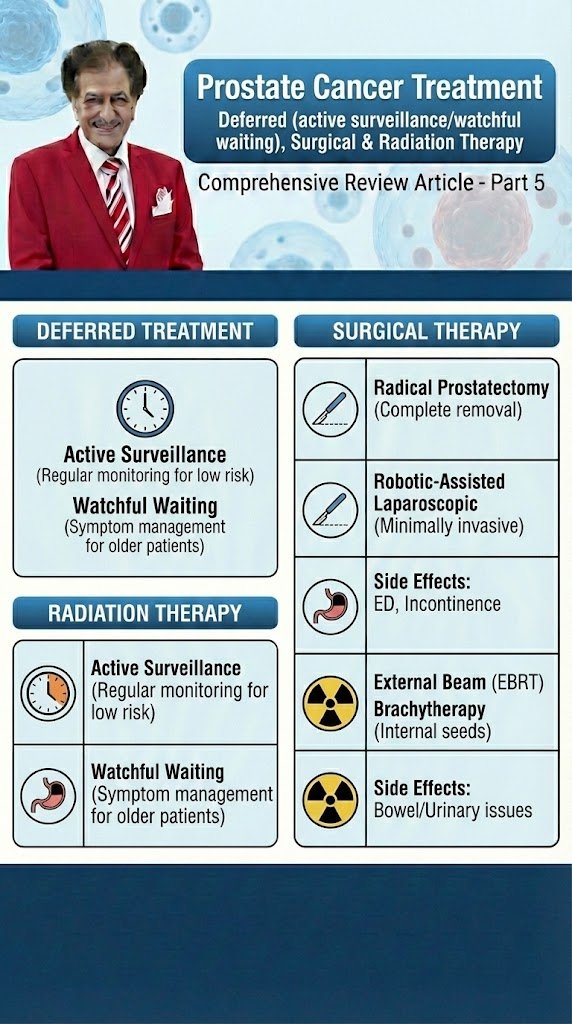
Prostate Cancer Treatment Deferred (active surveillance/watchful waiting), Surgical & Radiation Therapy Comprehensive Review Article Part 5

Prostate Cancer Treatment Deferred Part 5

Prostate Cancer Treatment Deferred (active surveillance/watchful waiting), Surgical & Radiation Therapy Comprehensive Review Article Part 5 Prof. Dr. Semir. A. Salim. Al Samarrai Figure 1. Active Surveillance and Long-Term Outcomes in Early Stage Prostate Cancer Treatment modalities: The treatment modalities contain different criterias, after first modality in the deferred treatment (active surveillance/watchful waiting). Deferred treatment (active surveillance/watchful waiting) In localised disease a life expectancy of at least 10 years is considered mandatory for any benefit from active treatment. Data are available on patients who did not undergo local treatment with up to 25 years of follow-up, with endpoints of overall survival (OS) and cancer specific survival (CSS). Several series have shown a consistent CSS rate of 82–87% at 10 years [1–6], and 80–95% for T1/T2 and ISUP grade < 2 PCas [512]. In three studies with data beyond 15 years, the DSS was 80%, 79% and 58% [3,5,6], and two reported 20-year CSS rates of 57% and 32%, respectively [3,5]. The observed heterogeneity in outcomes is due to differences in inclusion criteria, with some older studies from the pre-PSA era showing worse outcomes [5]. In addition, many patients classified as ISUP grade 1 would now be classified as ISUP grade 2–3 based on the 2005 Gleason classification, suggesting that the above-mentioned results should be considered as minimal. Patients with well-, moderately- and poorly differentiated tumours had 10-year CSS rates of 91%, 90% and 74%, respectively, correlating with data from the pooled analysis [7]. Observation was most effective in men aged 65–75 years with low-risk PCa [8]. Co-morbidity is as important as age in predicting life expectancy in men with PCa. Increasing co-morbidity greatly increases the risk of dying from non-PCa-related causes and for those men with a short life expectancy. In an analysis of 19,639 patients aged > 65 years who were not given curative treatment, most men with a CCI score > 2 had died from competing causes at 10 years follow-up regardless of their age at time of diagnosis. Tumour aggressiveness had little impact on OS suggesting that patients could have been spared biopsy and diagnosis of cancer. Men with a CCI score < 1 had a low risk of death at 10 years, especially for well or moderately-differentiated lesions [9]. This highlights the importance of assessing co-morbidity before considering a biopsy. In screen-detected localised PCa the lead-time bias is likely to be greater. Mortality from untreated screen-detected PCa in patients with ISUP grade 1–2 might be as low as 7% at 15 years follow-up [10]. Consequently, approximately 45% of men with PSA-detected PCa are suitable for close follow-up through a robust surveillance programme. There are two distinct strategies for conservative management that aim to reduce over-treatment: AS and WW (Table 1). Table 1. Definitions of active surveillance and watchful waiting Active surveillance Active surveillance aims to avoid unnecessary treatment in men with clinically localised PCa who do not require immediate treatment, but at the same time achieve the correct timing for curative treatment in those who eventually do [11]. Patients remain under close surveillance through structured surveillance programmes with regular follow-up consisting of PSA testing, clinical examination, MRI imaging and repeat prostate biopsies, with curative treatment being prompted by pre-defined thresholds indicative of potentially life-threatening disease, which is still potentially curable, while considering individual life expectancy. Watchful waiting refers to conservative management for patients deemed unsuitable for curative treatment from the outset, and patients are clinically ‘watched’ for the development of local or systemic progression with (imminent) disease-related complaints, at which stage they are then treated palliatively according to their symptoms in order to maintain QoL. Several cohorts have investigated AS in organ-confined disease, the findings of which were summarised in a systematic review [12]. More recently, the largest prospective series of men with low-risk PCa managed by AS was published [13]. Table 2 summarises the results of selective AS cohorts. Table 2. Active surveillance in screening-detected prostate cancer (large cohorts with longer-term follow-up) It is clear that the long-term OS and CSS of patients on AS are extremely good. However, more than one-third of patients are ‘reclassified’ during follow-up, most of whom undergo curative treatment due to disease upgrading, increase in disease extent, disease stage, progression or patient preference. Watchful waiting The Outcome of watchful waiting compared with active treatment showed the SPCG-4 study which was a RCT from the pre-PSA era, randomising patients to either WW or RP (Table 3) [14]. Table 3. Outcome of SPCG-4 at a median follow-up of 23.6 years The study found radical prostatectomy (RP) to provide superior cancer-specific survival (CSS), overall survival (OS) and biochemical progression-free survival (PFS) compared to watchful waiting (WW) at a median follow-up of 23.6 years (range 3 weeks–28 years). The overall evidence indicates that for men with asymptomatic, clinically localised PCa and with a life expectancy of < 10 years based on co-morbidities and/or age, the oncological advantages of active treatment over WW are unlikely to be relevant to them. Consequently, WW should be adopted for such patients. Radical Prostatectomy The second treatment modality with radical prostatectomy showed that the goal of RP by any approach is the eradication of cancer while, whenever possible, preserving pelvic organ function [15]. The procedure involves removing the entire prostate with its capsule intact and SVs, followed by vesico-urethral anastomosis. Surgical approaches have expanded from perineal and retropubic open approaches to laparoscopic and robotic-assisted techniques; anastomoses have evolved from Vest approximation sutures to continuous suture watertight anastomoses under direct vision and mapping of the anatomy of the dorsal venous complex (DVC) and cavernous nerves has led to excellent visualisation and potential for preservation of erectile function [16]. The main results from multi-centre RCTs involving RP are summarised in Table 4. Table 4. Oncological results of radical prostatectomy in organ-confined disease in RCTs Pre-operative preparation: Pre-operative patient education As before any surgery appropriate education and patient consent is mandatory prior to RP. Peri-operative education has been shown to improve long-term patient satisfaction following RP [17]. Augmentation of standard verbal

Prostate Cancer Treatment Deferred Part 5 قراءة المزيد »

Urological Infections Epidemiology, aetiology and pathophysiology Part 1

Urological Infections Epidemiology, aetiology and pathophysiology Part 1

Urological Infections Epidemiology, aetiology and pathophysiology Part 1 Comprehensive Review Article Prof. Dr. Semir. A. Salim. Al Samarrai  Classification: Different classification systems of UTI exist. Most widely used are those developed by the Centres for Disease Control and Prevention (CDC) [1], Infectious Diseases Society of America (IDSA) [2], European Society of Clinical Microbiology and Infectious Diseases (ESCMID) [3] as well as the U.S. Food and Drug Administration (FDA) [4,5]. Current UTI guidelines frequently use the concept of uncomplicated and complicated UTI with a number of modifications (Figure 1). Figure 1: Concept of uncomplicated and complicated UTI           The following classification of UTIs is adopted in the EAU Urological Infections Guidelines:                 Antimicrobial Stewardship Although the benefits to patients of antibiotic use are clear, overuse and misuse have contributed to the growing problem of resistance amongst uropathogenic bacteria, which is a serious threat to public health [6,7]. In acute care hospitals, 20-50% of prescribed antibiotics are either unnecessary or inappropriate [8]. In response, a worldwide initiative seeks to incorporate Antimicrobial Stewardship programs in healthcare [9]. Antimicrobial Stewardship aims to optimise clinical outcomes and ensure cost-effective therapy whilst minimising unintended consequences of antimicrobial use such as healthcare associated infections including Clostridium difficile, toxicity, selection of virulent organisms and emergence of resistant bacterial strains [10].   Asymptomatic bacteriuria in adults: Background Urinary growth of bacteria in an asymptomatic individual (asymptomatic bacteriuria – ABU) is common, and corresponds to a commensal colonisation [11]. Clinical studies have shown that ABU may protect against superinfecting symptomatic UTI, thus treatment of ABU should be performed only in cases of proven benefit for the patient to avoid the risk of selecting antimicrobial resistance and eradicating a potentially protective ABU strain [12,13]. Epidemiology, aetiology and pathophysiology Asymptomatic bacteriuria occurs in an estimated 1-5% of healthy pre-menopausal females. Increasing to 4-19% in otherwise healthy elderly females and men, 0.7-27% in patients with diabetes, 2-10% in pregnant women, 15-50% in institutionalised elderly populations, and in 23-89% in patients with spinal cord injuries [14]. Asymptomatic bacteriuria in younger men is uncommon, but when detected, chronic bacterial prostatitis must be considered. The spectrum of bacteria in ABU is similar to species found in uncomplicated or complicated UTIs, depending on the presence of risk factors. Diagnostic evaluation Asymptomatic bacteriuria in an individual without urinary tract symptoms is defined by a mid-stream sample of urine showing bacterial growth > 105 cfu/mL in two consecutive samples in women [15] and in one single sample in men [16]. In a single catheterised sample, bacterial growth may be as low as 102 cfu/mL to be considered representing true bacteriuria in both men and women [14,17]. Cystoscopy and/or imaging of the upper urinary tract is not mandatory if the medical history is otherwise without remark. If persistent growth of urease producing bacteria, i.e. Proteus mirabilis is detected, stone formation in the urinary tract must be excluded [18]. In men, a digital rectal examination (DRE) has to be performed to investigate the possibility of prostate diseases. Disease management: Patients without identified risk factors Asymptomatic bacteriuria does not cause renal disease or damage [19]. Only one prospective, non-randomised study investigated the effect of treatment of ABU in adult, non-diabetic, non-pregnant women [20], and found no difference in the rate of symptomatic UTIs. Furthermore, as the treatment of ABU has been proven to be unnecessary in most high-risk patient subgroups, there is panel consensus that the results of these subgroups can also be applied to patients without identified risk factors. Therefore, screening and treatment of ABU is not recommended in patients without risk factors. Patients with ABU and recurrent UTI, otherwise healthy One RCT investigated the effect of asymptomatic bacteriuria (ABU) treatment in female patients with recurrent symptomatic UTI without identified risk factors [13] and demonstrated that treatment of ABU increases the risk for a subsequent symptomatic UTI episode, compared to non-treated patients (RR 0.28, 95% CI 0.21 to 0.38; n=673). This protective effect of spontaneously developed ABU can be used as part of prevention in female patients with recurrent symptomatic UTI; therefore, treatment of ABU is not recommended. Pregnant women: Is treatment of ABU beneficial in pregnant women? Twelve RCTs comparing antibiotic treatments of ABU with placebo controls or no treatment [21-32], with different antibiotic doses and regimens were identified, ten published before 1988 and one in 2015. Eleven RCTs (n=2,002) reported on the rate of symptomatic UTIs [21,23-31,33]. Antibiotic treatment significantly reduced the number of symptomatic UTIs compared to placebo or no treatment (average RR 0.22, 95% CI 0.12 to 0.40). Six RCTs reported on the resolution of bacteriuria [21-23,25,28,30]. Antibiotic treatment was effective in the resolution of bacteriuria compared to placebo (average RR 2.99, 95% CI 1.65 to 5.39; n=716). Eight RCTs reported on the rate of low birthweights [21,23-26,29,32,33]. Antibiotic treatment was associated with lower rates of low birthweight compared to placebo or no treatment (average RR 0.58, 95% CI 0.36 to 0.94; n=1,689). Four RCTs reported on the rate of preterm deliveries [29,30,32,33]. Antibiotic treatment was associated with lower rates of preterm delivery compared to placebo or no treatment (average RR 0.34, 95% CI 0.18 to 0.66; n=854). Based on the beneficial maternal and foetal effects of antibiotic treatment pregnant women should be screened and treated for ABU. However, the panel of EAU Guidelines edition 2022 would like to emphasize that most available studies have low methodological quality and are from the 60s to 80s. Diagnostic and treatment protocols and accessibility to medical services have dramatically changed since then; therefore, the quality of evidence for this recommendation is low. In a newer study of higher methodological quality, the beneficial effects of antibiotic treatment are not as evident [33]. Therefore, it is advisable to consult national recommendations for pregnant women. Which treatment duration should be applied to treat ABU in pregnancy?  Sixteen RCTs comparing the efficacy of different antibiotic treatments in pregnant women with ABU were identified [34-49]. There was significant heterogeneity amongst the studies. Studies compared

Urological Infections Epidemiology, aetiology and pathophysiology Part 1 قراءة المزيد »

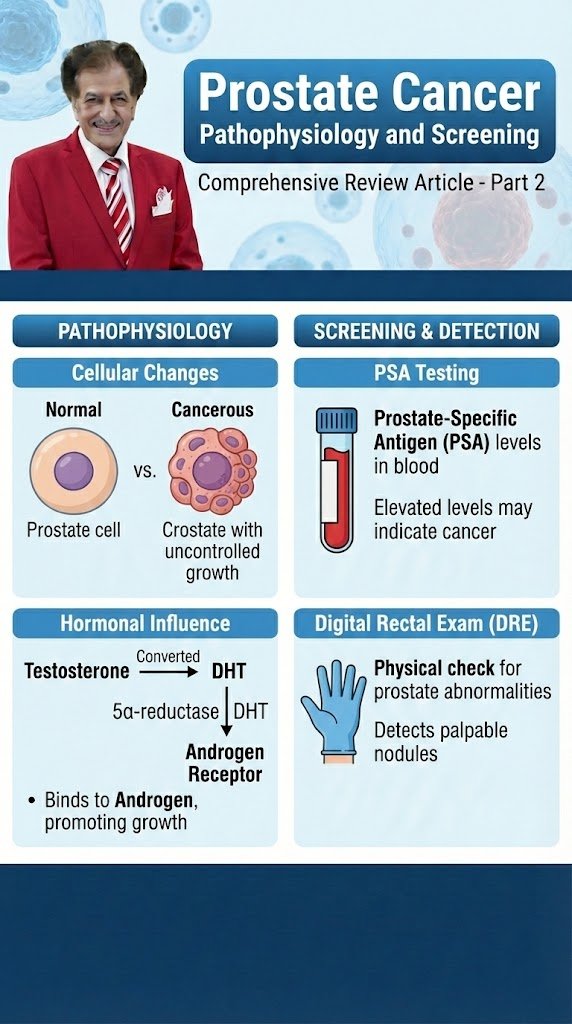
Prostate Cancer PART 2

Prostate Cancer PART 2

Prostate Cancer Classification Comprehensive Review Article Part 2 Prof. Dr. Semir. A. Salim. Al Samarrai The objective of a tumour classification system is to combine patients with a similar clinical outcome. This allows for the design of clinical trials on relatively homogeneous patient populations, the comparison of clinical and pathological data obtained from different hospitals across the world, and the development of recommendations for the treatment of these patient populations. Throughout these Guidelines the 2017 Tumour, Node, Metastasis (TNM) classification for staging of PCa (Table 1) [1], Table 1. Clinical Tumour Node Metastatis (TNM) classification of PCa and the EAU risk group classification, which is essentially based on D’Amico’s classification system for PCa, are used (Table 2) [2]. Table 2. EAU risk groups for biochemical recurrence of localized and locally advanced prostate cancer The latter classification is based on the grouping of patients with a similar risk of biochemical recurrence (BCR) after radical prostatectomy (RP) or external beam radiotherapy (EBRT). Magnetic resonance imaging and targeted biopsy may cause a stage shift in risk classification systems [3]. Clinical T stage only refers to digital rectal examination (DRE) findings; local imaging findings are not considered in the TNM classification. Pathological staging (pTNM) is based on histopathological tissue assessment and largely parallels the clinical TNM, except for clinical stage T1 and the T2 substages. Pathological stages pT1a/b/c do not exist and histopathologically confirmed organ-confined PCas after RP arempathological stage pT2. The current Union for International Cancer Control (UICC) no longer recognises pT2 substages [1]. Of note: the EANM recently proposed a ‘miTNM’ (molecular imaging TNM) classification, taking into account prostate-specific membrane antigen positron emission tomography–computed tomography (PSMA PET/CT) findings [4]. The prognosis of the miT, miN and miM substages is likely to be better to their T, N and M counterparts due to the ‘Will Rogers phenomenon’; the extent of this prognosis shift remains to be assessed as well as its practical interest and impact [5]. In the original Gleason grading system, 5 Gleason grades (ranging from 1–5) based on histological tumour architecture were distinguished, but in the 2005 and subsequent 2014 International Society of Urological Pathology (ISUP) Gleason score (GS) modifications Gleason grades 1 and 2 were eliminated [6,7]. The 2005 ISUP modified GS of biopsy-detected PCa comprises the Gleason grade of the most extensive (primary) pattern, plus the second most common (secondary) pattern, if two are present. If one pattern is present, it needs to be doubled to yield the GS. For three grades, the biopsy GS comprises the most common grade plus the highest grade, irrespective of its extent. The grade of intraductal carcinoma should also be incorporated in the GS [8]. In addition to reporting of the carcinoma features for each biopsy, an overall (or global) GS based on the carcinoma-positive biopsies can be provided. The global GS takes into account the extent of each grade from all prostate biopsies. The 2014 ISUP endorsed grading system limits the number of PCa grades, ranging them from 1 to 5 (see Table 2 and table 3) [8,9]. Table 3. International Society of Urological Pathology 2014 grade (group) system Further sub-stratification of the intermediate-risk group can be made and specifically the National Cancer Center Network (NCCN) Guidelines subdivide intermediate-risk disease into favourable intermediate-risk and unfavourable intermediate-risk, with unfavourable features including ISUP grade 3, and/or > 50% positive biopsy cores and/or at least two intermediate-risk factors [10]. The descriptor ‘clinically significant’ is widely used to differentiate PCa that may cause morbidity or death from types of PCa that do not. This distinction is particularly important as insignificant PCa that does not cause harm is so common [11]. Unless this distinction is made, such cancers are at high risk of being overtreated, with the treatment itself risking harmful side effects to patients. The over-treatment of insignificant PCas has been criticised as a major drawback of PSA testing [12]. However, defining what is clinically significant and what is insignificant PCa is difficult. In large studies of RP specimens which showed only ISUP grade 1 disease, extra prostatic extension (EPE) was extremely rare (0.28% of 2,502 cases) and seminal vesicle (SV) invasion or lymph node (LN) metastasis did not occur at all [13,14]. International Society for Urological Pathology grade 1 disease itself can therefore be considered clinically insignificant. Whilst ISUP grade 1 bears the hallmarks of cancer histologically, ISUP grade 1 itself does not behave in a clinically malignant fashion. However, ISUP grade 1 is first diagnosed at biopsy and guides management decisions, not after the prostate has been removed. The current standard practice of MRI-targeted and template biopsies has reduced diagnostic inaccuracy [15], however sampling error may still occur such that higher grade cancer could be missed. This should be especially considered if the prior MRI showed a suspicious lesion, but only ISUP grade 1 was found at biopsy. Another complexity in defining insignificant cancer is that ISUP grade 1 may progress to higher grades over time, becoming clinically significant at a later biopsy [16]. Therefore, although ISUP grade 1 itself can be described as clinically insignificant, it is important to take into account other factors, including imaging prior to biopsy and adequate sampling core number. When combined with low-risk clinical factors (see Table 2), ISUP grade 1 represents low-risk PCa, with its recommendation of preferred management being active surveillance (AS) or watchful waiting (WW). It should be noted, therefore, that defining ISUP grade 1 as insignificant cancer does not mean it should be ignored, but safely observed. Epidemiological and autopsy data also suggest that a proportion of ISUP grade 2 PCas would remain undetectable during a man’s life [17] and therefore may be overtreated. In current guidelines deferred treatment may be offered to select patients with intermediate-risk PCa [10], but evidence is lacking for appropriate selection criteria [18]. Recent papers have defined clinically significant cancer differently, commonly using ISUP grade 2 and above and even ISUP grade 3 and above, demonstrating the lack of consensus and evolution of its definition [19-22]. Some papers

Prostate Cancer PART 2 قراءة المزيد »

Scroll to Top