
Bladder & Urinary Problems

Bladder problems include overactive bladder and urgency, urinary incontinence, waking at night to pass urine and difficulty passing urine. Assessment starts with the history, a urine test and a bladder diary, and sometimes a residual urine scan or cystoscopy. Treatment usually starts with lifestyle changes and pelvic floor exercises, then medicines or procedures depending on the case.

This section covers overactive bladder and urinary incontinence in women and men. See also our urology services.

References

  1. EAU Guidelines on Non-neurogenic Female LUTS
  2. Urinary incontinence – NHS
  3. The AUA/SUFU Guideline on the Diagnosis and Treatment of Idiopathic Overactive Bladder
Overactive Urinary Bladder

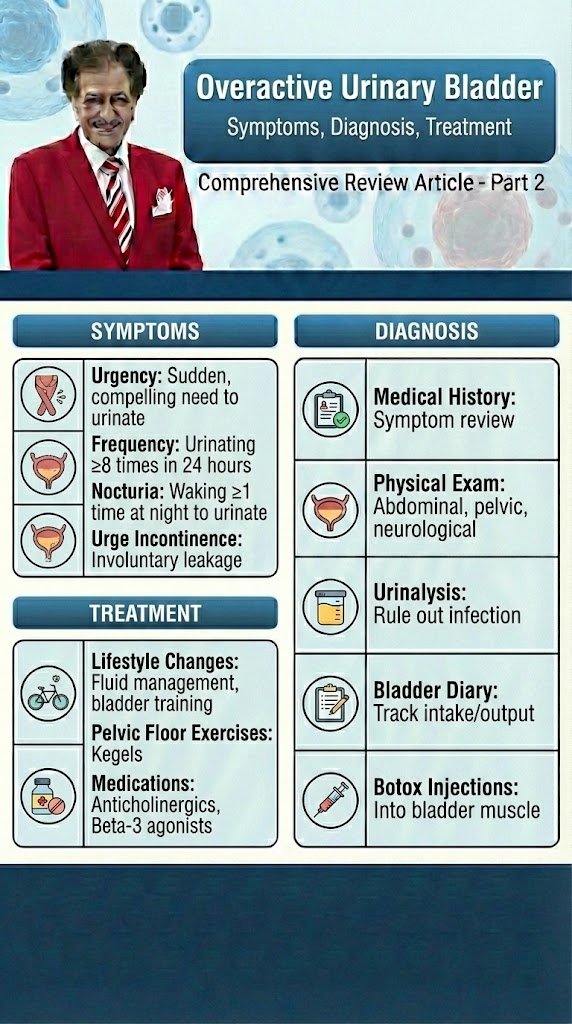
Overactive Bladder, Part 2: Diagnosis and Evaluation

Quick answer: Overactive bladder is diagnosed mainly from your symptoms. The EAU Guidelines recommend a full medical history, a physical examination, a urine test, a bladder diary kept for at least three days and an ultrasound check of urine left after voiding. Bladder pressure studies are not routine and are kept for uncertain cases or

Overactive Bladder, Part 2: Diagnosis and Evaluation Read More »
Overactive Urinary Bladder

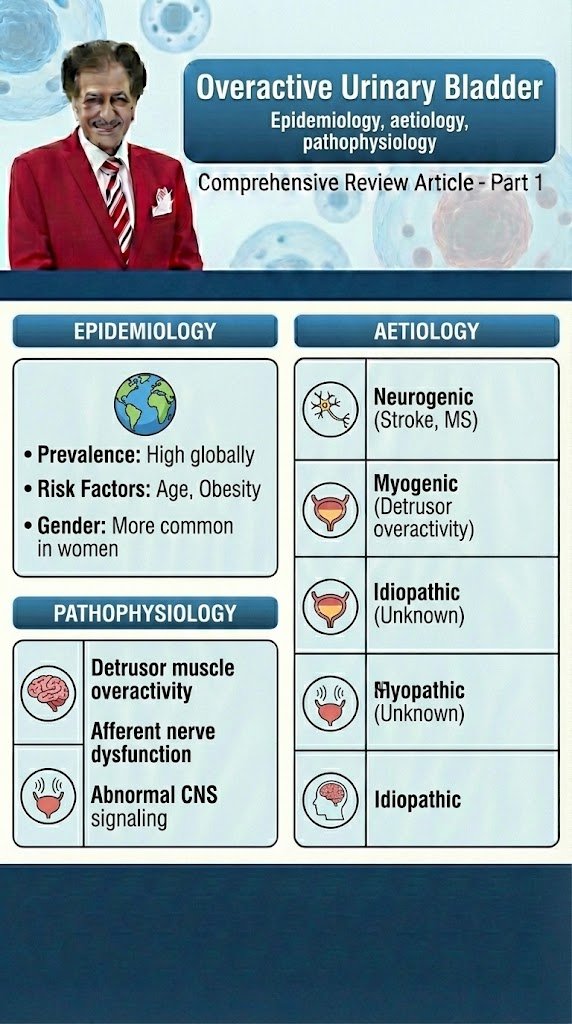
Overactive Bladder, Part 1: Epidemiology, Aetiology and Pathophysiology

Quick answer: Overactive bladder is a common condition in which the bladder muscle squeezes at the wrong time, causing a sudden, hard-to-delay urge to pass urine, frequent trips to the toilet by day and night, and sometimes leakage. The exact cause is often unknown, but nerve signals, bladder muscle overactivity, ageing and lifestyle factors can

Overactive Bladder, Part 1: Epidemiology, Aetiology and Pathophysiology Read More »

The latest treatments for overactive bladder (non-neurological) syndrome in women and men.

Quick answer: According to the 2024 AUA/SUFU guideline on idiopathic overactive bladder, treatment starts with bladder training and behavioural changes for everyone, followed by antimuscarinic or beta-3 agonist medicines. If these do not help enough or are not tolerated, options include sacral neuromodulation, percutaneous tibial nerve stimulation and botulinum toxin injections into the bladder muscle,

The latest treatments for overactive bladder (non-neurological) syndrome in women and men. Read More »

احجز موعدك مع البروفيسور السامرائي

مركز البروفيسور السامرائي الطبي في مدينة دبي الطبية. سجّل بياناتك أو راسلنا على واتساب.

مركز البروفيسور السامرائي الطبي

البروفيسور الدكتور سمير أحمد السامرائي، استشاري المسالك البولية.
رقم الترخيص (MOHAP): ZGU3I12X-291225

خدماتنا

تواصل معنا

© 2020 البروفيسور سمير السامرائي.

تم التعديل وعمل السيو مع شركة ماركتير مارت للتسويق الالكتروني https://marketermartllc.com

Scroll to Top