
Urological Cancers

Urological cancers include cancers of the prostate, bladder, kidney, testis and upper urinary tract. The key warning sign is blood in the urine, even once and without pain, as well as a lump in a testicle or a raised PSA. Treatment depends on the type and stage of the cancer and is planned by the urologist and oncologist together, following the guidelines.

This section covers prostate, bladder, kidney, testicular and upper tract cancers, from diagnosis to treatment and follow-up. See also our urology services.

References

  1. EAU Guidelines on Prostate Cancer
  2. EAU Guidelines on Non-muscle-invasive Bladder Cancer
  3. EAU Guidelines on Renal Cell Carcinoma
  4. Symptoms of bladder cancer – NHS
Non-muscle-invasive Bladder Cancer Part 2

Non-muscle-invasive Bladder Cancer, Part 2: Recurrence Risk, Management and Follow-up

Quick answer: Non-muscle-invasive bladder cancer is first removed through the urethra, and further treatment depends on the risk that it will come back or progress. Low-risk tumours may need only regular cystoscopy checks, while higher-risk tumours usually receive treatment placed directly into the bladder, such as BCG immunotherapy or chemotherapy. Because recurrence is common, long-term

Non-muscle-invasive Bladder Cancer, Part 2: Recurrence Risk, Management and Follow-up Read More »
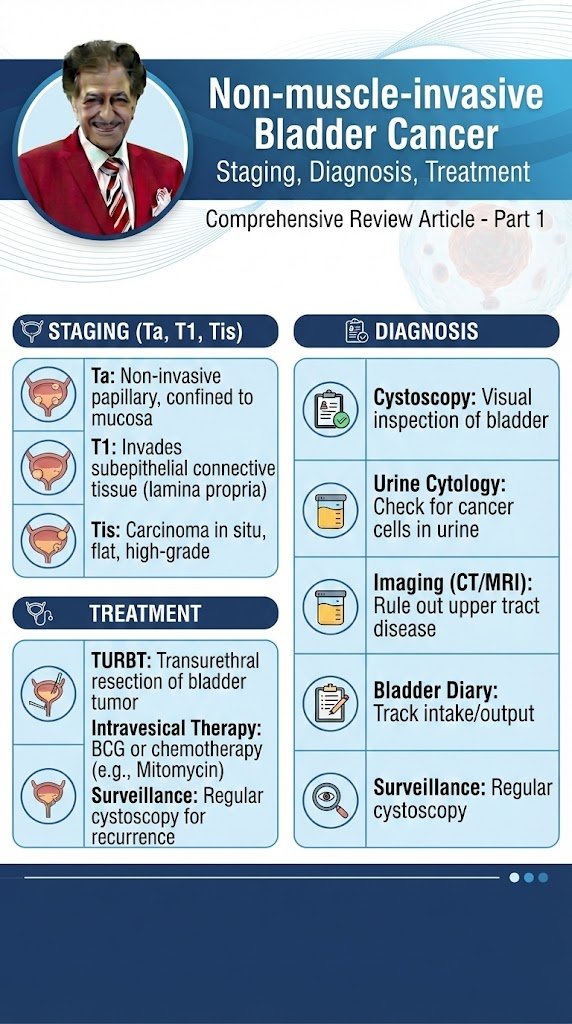
Non-muscle-invasive Bladder Cancer

Non-muscle-invasive Bladder Cancer, Part 1: Epidemiology, Aetiology and Pathology

Quick answer: Non-muscle-invasive bladder cancer is bladder cancer that has not grown into the muscle layer of the bladder wall. Its main symptom is blood in the urine, which should always be checked. Risk factors include smoking, older age, male sex, certain workplace chemicals and past schistosomiasis. Diagnosis is made by cystoscopy, with tissue examined

Non-muscle-invasive Bladder Cancer, Part 1: Epidemiology, Aetiology and Pathology Read More »

Prostate Cancer Salvage Therapy Comprehensive Review Article Part 7

Prostate Cancer, Part 7: Salvage Therapy

Quick answer: Salvage therapy is treatment given when prostate cancer comes back after surgery or radiotherapy, usually first detected by a rising PSA on follow-up blood tests. After surgery, radiotherapy to the prostate area is the main option, sometimes with hormone therapy. After radiotherapy, options include surgery, further local treatment or hormone therapy, chosen after

Prostate Cancer, Part 7: Salvage Therapy Read More »

prostate cancer treatment in dubai

Prostate Cancer, Part 6: Hormonal Therapy

Quick answer: Hormone therapy lowers testosterone or blocks its effect, because most prostate cancers need testosterone to grow. On its own it controls the cancer but does not cure it. It is combined with radiotherapy for higher-risk localised cancer and is the backbone of treatment for advanced cancer, often together with newer hormone medicines or

Prostate Cancer, Part 6: Hormonal Therapy Read More »

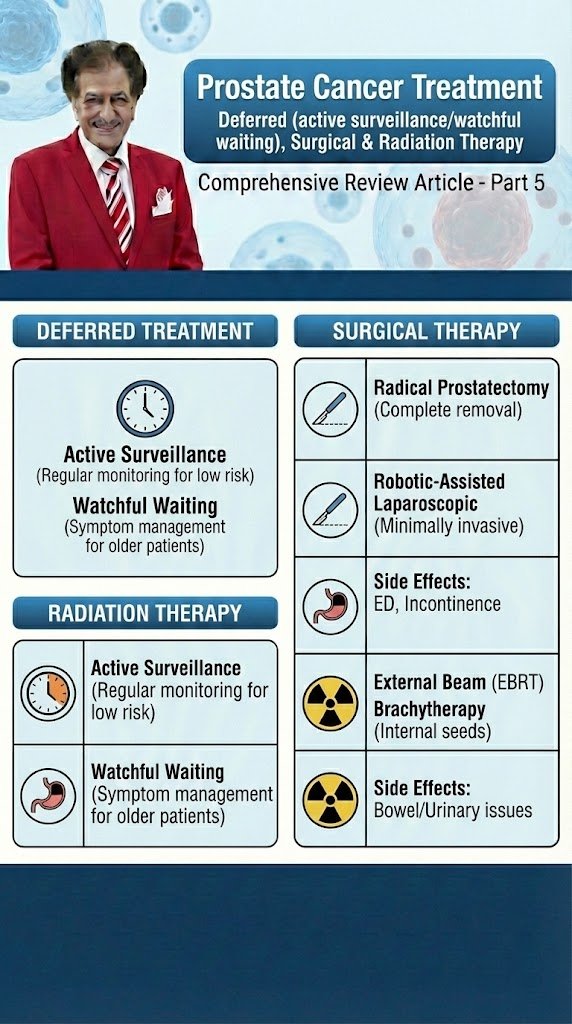
Prostate Cancer Treatment Deferred (active surveillance/watchful waiting), Surgical & Radiation Therapy Comprehensive Review Article Part 5

Prostate Cancer, Part 5: Deferred Treatment, Surgery and Radiotherapy

Quick answer: Not every prostate cancer needs immediate treatment. Low-risk cancer is often followed with active surveillance, using regular PSA tests, MRI and repeat biopsies, with treatment started if it changes. For cancer needing treatment, removing the prostate surgically or radiotherapy are the main options; each has different side effects, which should be discussed before

Prostate Cancer, Part 5: Deferred Treatment, Surgery and Radiotherapy Read More »

Prostate Cancer Diagnostic Evaluation Comprehensive Review Article Part 3

Prostate Cancer, Part 3: Diagnostic Evaluation

Quick answer: Prostate cancer is usually suspected from a raised PSA blood test or an abnormal rectal examination. Current guidelines recommend an MRI scan of the prostate before deciding on a biopsy, so that suspicious areas can be targeted. If cancer is found, further scans check whether it has spread and help plan treatment with

Prostate Cancer, Part 3: Diagnostic Evaluation Read More »

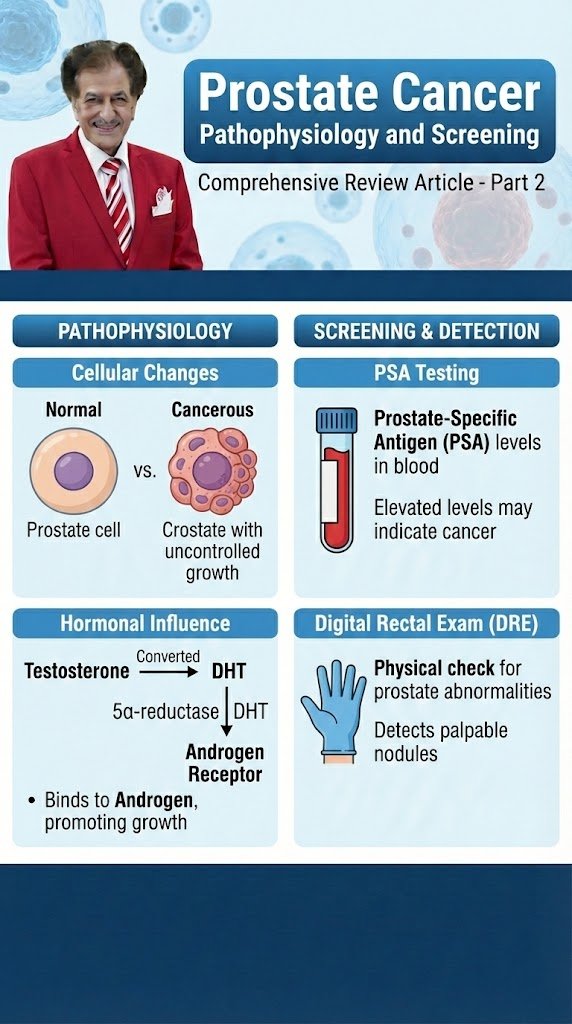
Prostate Cancer PART 2

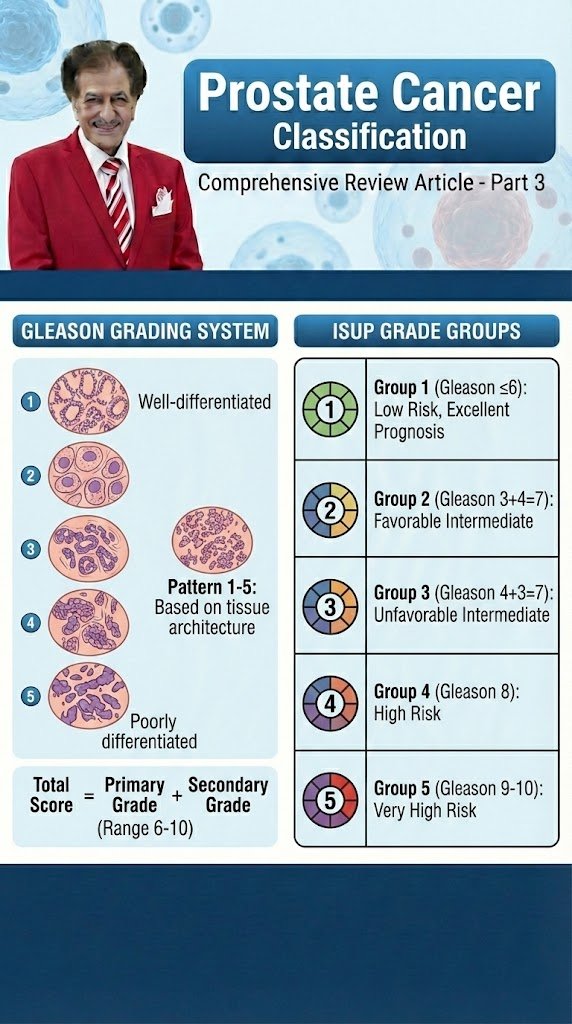
Prostate Cancer, Part 2: Classification

Quick answer: Doctors classify prostate cancer by how far it has grown (the TNM stage), how abnormal the cells look under the microscope (the Gleason score, now reported as Grade Groups), and the PSA level. Combining these places the cancer in a risk group, which guides whether monitoring, surgery, radiotherapy or other treatment is suitable.

Prostate Cancer, Part 2: Classification Read More »

Prostate Cancer Epidemiology and Aetiology Comprehensive Review Article Part 1

Prostate Cancer, Part 1: Epidemiology and Aetiology

Quick answer: Prostate cancer mainly affects older men, and age is the strongest risk factor. Risk is also higher with a father or brother who had it, in men of African descent, and in men carrying inherited gene changes such as BRCA2. The EAU guidelines state that no proven prevention strategy exists, so informed early-detection

Prostate Cancer, Part 1: Epidemiology and Aetiology Read More »

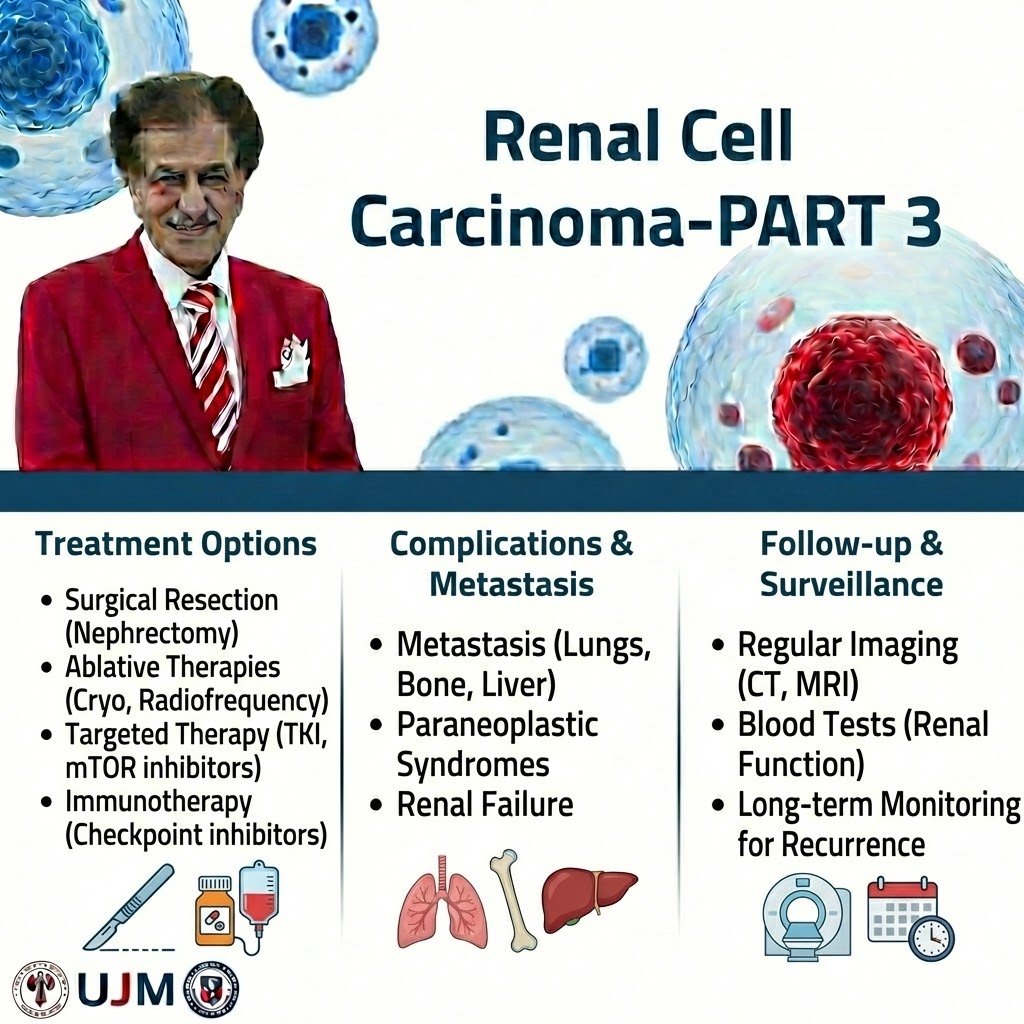
Renal Cell Carcinoma PART3

Renal Cell Carcinoma, Part 3: Advanced and Metastatic Disease

Quick answer: When kidney cancer has spread or come back, treatment usually aims to control the disease and its symptoms rather than cure it. Targeted medicines and immunotherapy, used alone or in combination, can slow the cancer and help some people live longer. Radiotherapy may be used to ease symptoms, and palliative care teams support

Renal Cell Carcinoma, Part 3: Advanced and Metastatic Disease Read More »

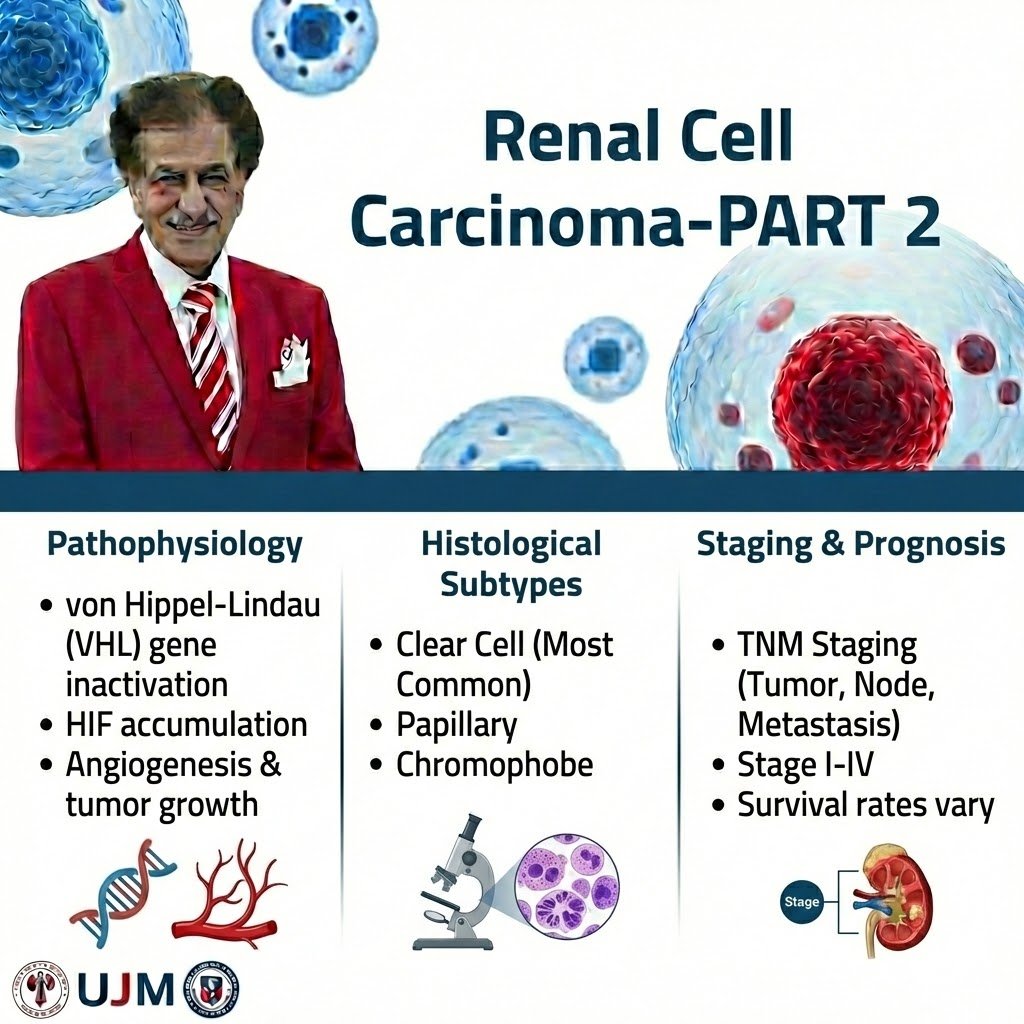
Renal Cell Carcinoma

Renal Cell Carcinoma, Part 2: Treatment of Localised Disease

Quick answer: When kidney cancer is found early and has not spread, surgery is the main treatment, often removing only part of the kidney to preserve its function. Small tumours, or people not fit for surgery, may be treated with ablation that freezes or heats the cancer. The choice depends on the tumour, kidney function

Renal Cell Carcinoma, Part 2: Treatment of Localised Disease Read More »

احجز موعدك مع البروفيسور السامرائي

مركز البروفيسور السامرائي الطبي في مدينة دبي الطبية. سجّل بياناتك أو راسلنا على واتساب.

مركز البروفيسور السامرائي الطبي

البروفيسور الدكتور سمير أحمد السامرائي، استشاري المسالك البولية.
رقم الترخيص (MOHAP): ZGU3I12X-291225

خدماتنا

تواصل معنا

© 2020 البروفيسور سمير السامرائي.

تم التعديل وعمل السيو مع شركة ماركتير مارت للتسويق الالكتروني https://marketermartllc.com

Scroll to Top